The Economics of Competitive Advantage
Why companies that build structural advantages consistently outperform competitors
In today’s volatile markets, growth alone is no longer enough. Companies that consistently outperform their peers do so because they build structural advantages into the core of their strategy.
These advantages reshape the economic foundations of competition — allowing firms to sustain higher margins, scale faster, and defend their market position over time.
Research from Harvard Business School and the strategic frameworks developed by Michael E. Porter show that long-term industry leaders rarely rely on short-term tactics. Instead, they design business models where profitability becomes structurally embedded.
For leadership teams, the central strategic challenge is clear:
build advantages competitors cannot easily replicate.
Competitive Advantage Is an Economic System
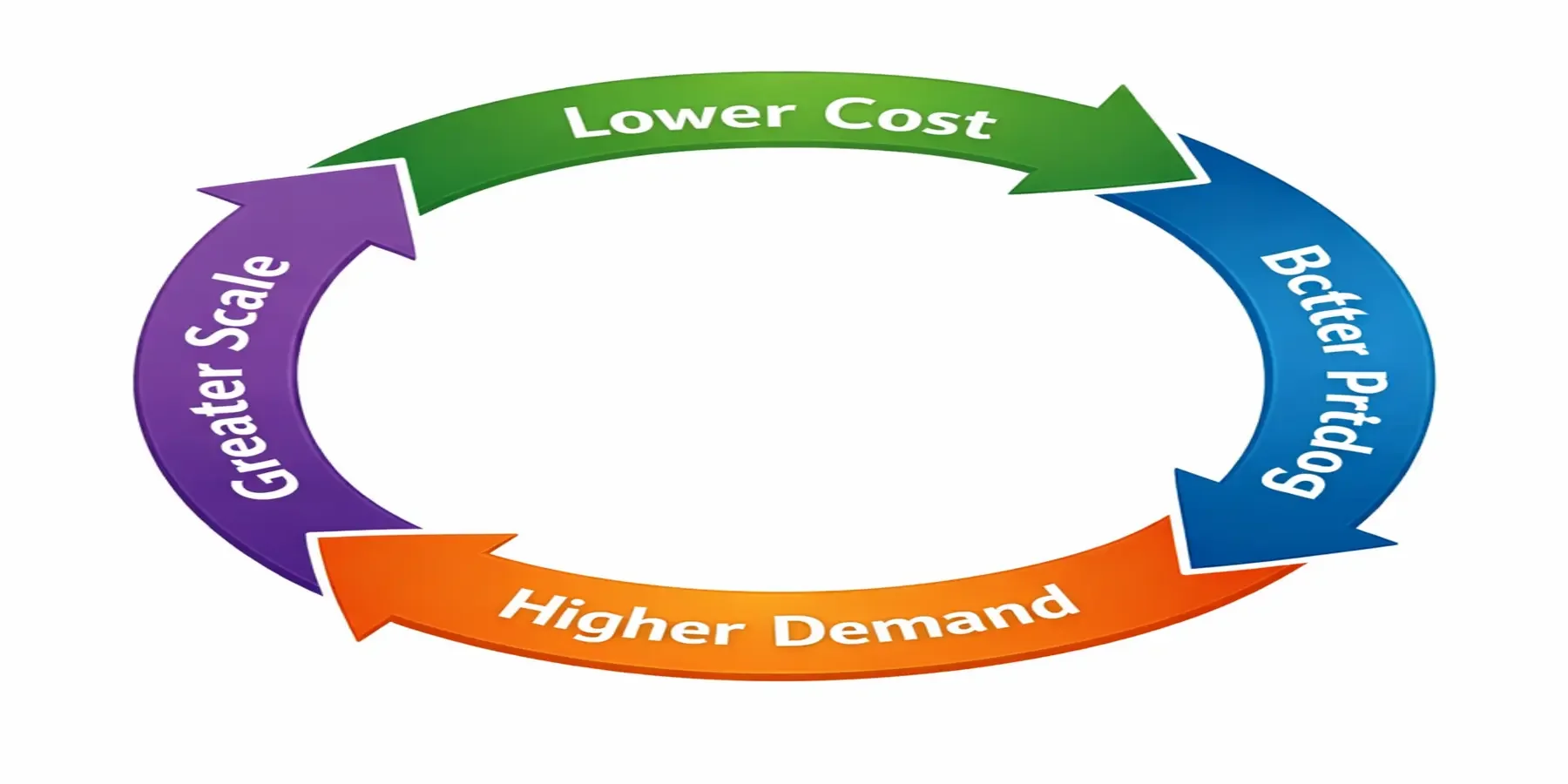
True competitive advantage is not a single capability. It is an economic system that compounds over time.
Leading companies align multiple strategic elements:
• cost structure
• pricing power
• scale economics
• customer loyalty
• operational efficiency
When these elements reinforce each other, they create self-reinforcing performance loops that competitors struggle to break.
This is why firms with structural advantages typically achieve:
• higher operating margins
• stronger resilience during downturns
• faster long-term growth
Strategy therefore becomes less about reacting to competition and more about reshaping the economics of the industry itself.
The Strategic Foundations of Structural Advantage
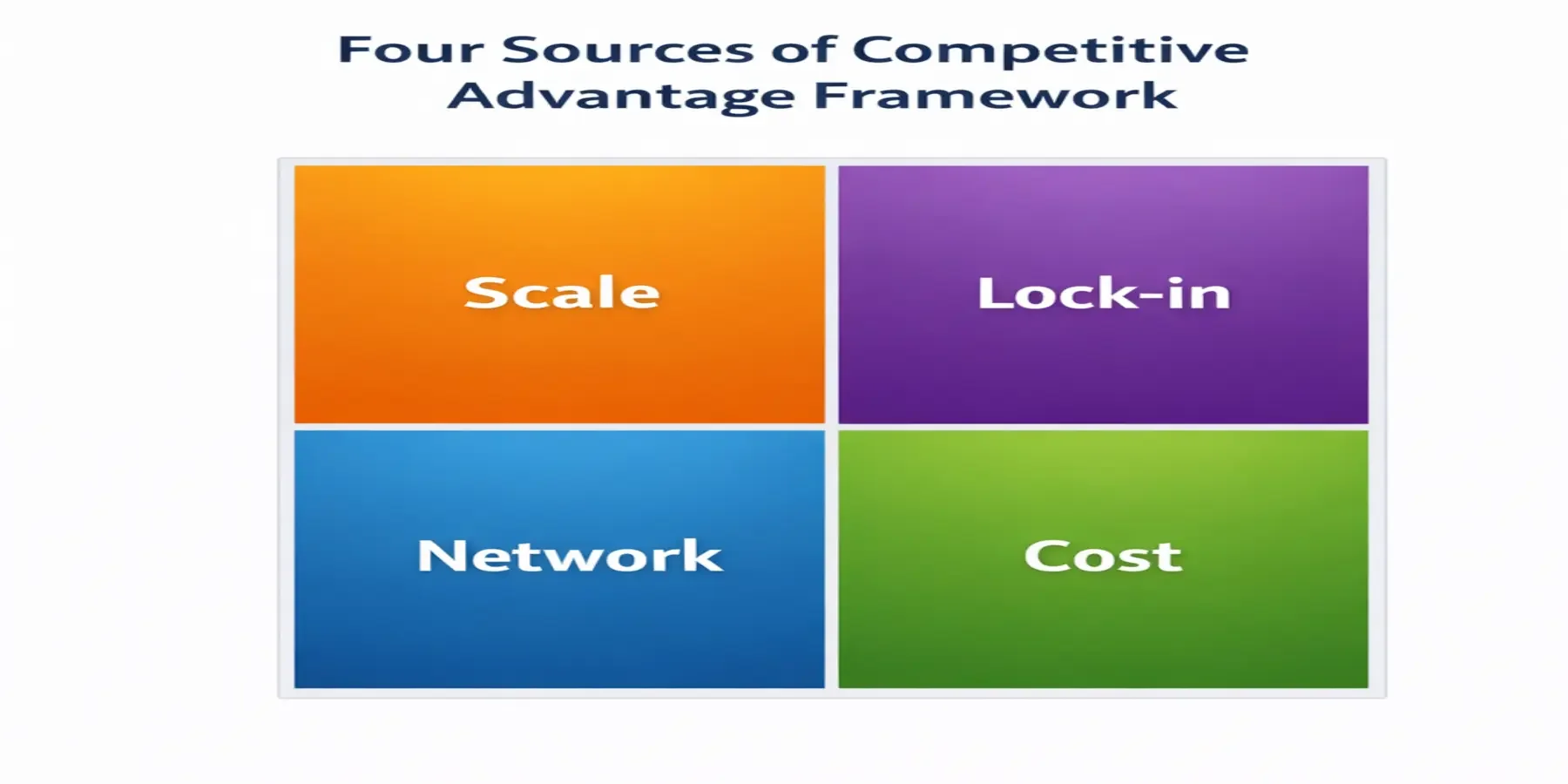
Across industries, durable advantages tend to emerge from a small set of economic drivers.
Scale Economics
Large-scale operations lower unit costs and increase bargaining power with suppliers.
Technology platforms such as Amazon have built massive infrastructure that competitors cannot easily replicate.
Customer Lock-In
Companies create ecosystems, data advantages, or switching costs that retain customers over long periods.
For example, Apple integrates hardware, software, and services into a tightly connected ecosystem.
Network Effects
Platforms become more valuable as more users participate.
This dynamic strengthens companies such as Microsoft and its enterprise software ecosystem.
Cost Leadership
Operational excellence and supply chain advantages allow companies to consistently deliver lower prices.
This advantage is particularly powerful in high-volume industries.
Case Study: Structural Advantage in Retail — Costco
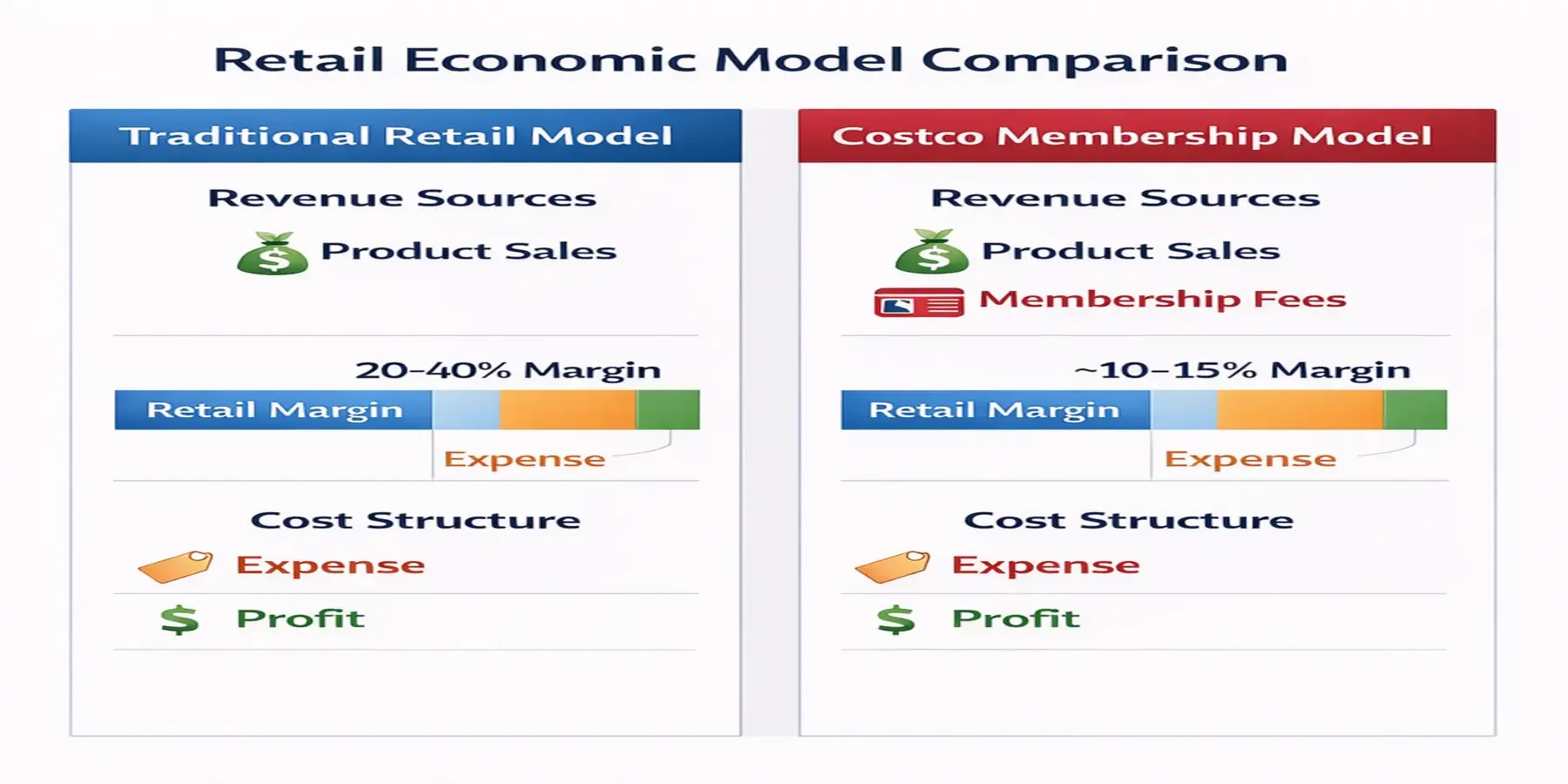
One of the most powerful examples of structural advantage can be seen in the strategy of Costco.
Rather than competing through promotions or assortment breadth, Costco redesigned the economics of retail.
Its model combines three reinforcing advantages.
Membership Economics
Membership fees generate billions in annual revenue and represent a major share of operating profit.
This allows Costco to maintain extremely low product margins, reinforcing its price leadership.
Radical Operational Simplicity
Most supermarkets carry 30,000–40,000 products.
Costco typically sells around 4,000 SKUs, drastically reducing complexity across procurement, logistics, and inventory.
The result: superior efficiency and scale purchasing power.
Price Trust and Customer Loyalty
Costco caps product markups at approximately 14–15%, far below traditional retailers.
This builds exceptional price credibility with customers and reduces the need for aggressive promotional spending.
Together, these elements create a self-reinforcing economic system that competitors struggle to replicate without redesigning their entire business model.
Why Many Companies Fail to Build Advantage
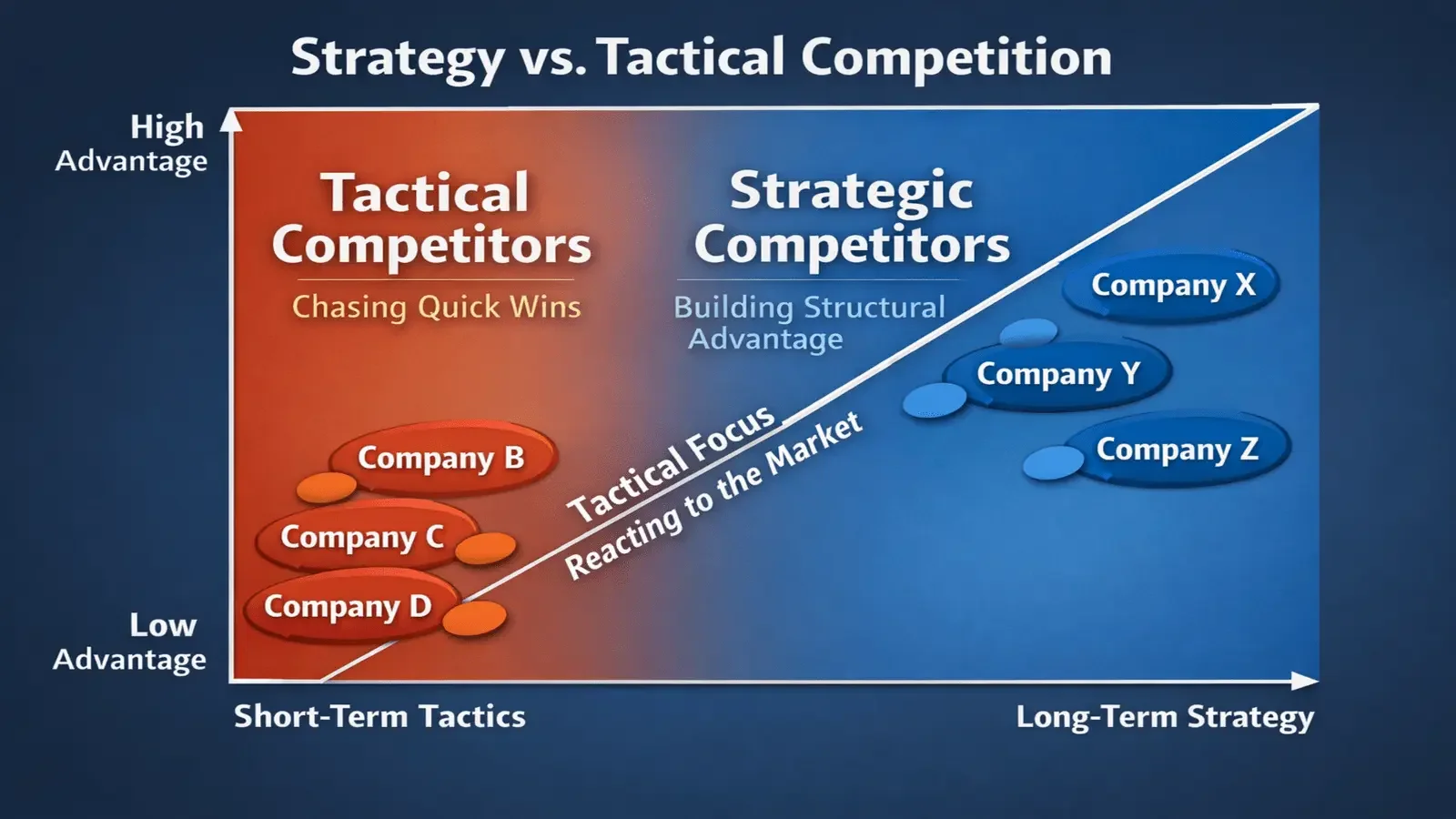
Despite recognizing the importance of strategy, many companies focus on initiatives that do not fundamentally change industry economics.
Common strategic traps include:
• chasing short-term growth targets
• competing primarily on marketing or pricing
• launching undifferentiated products
• expanding without scale advantages
These approaches may generate temporary improvements but rarely create defensible market leadership.
True advantage requires intentional strategic design.
Strategic Imperative for Leadership Teams
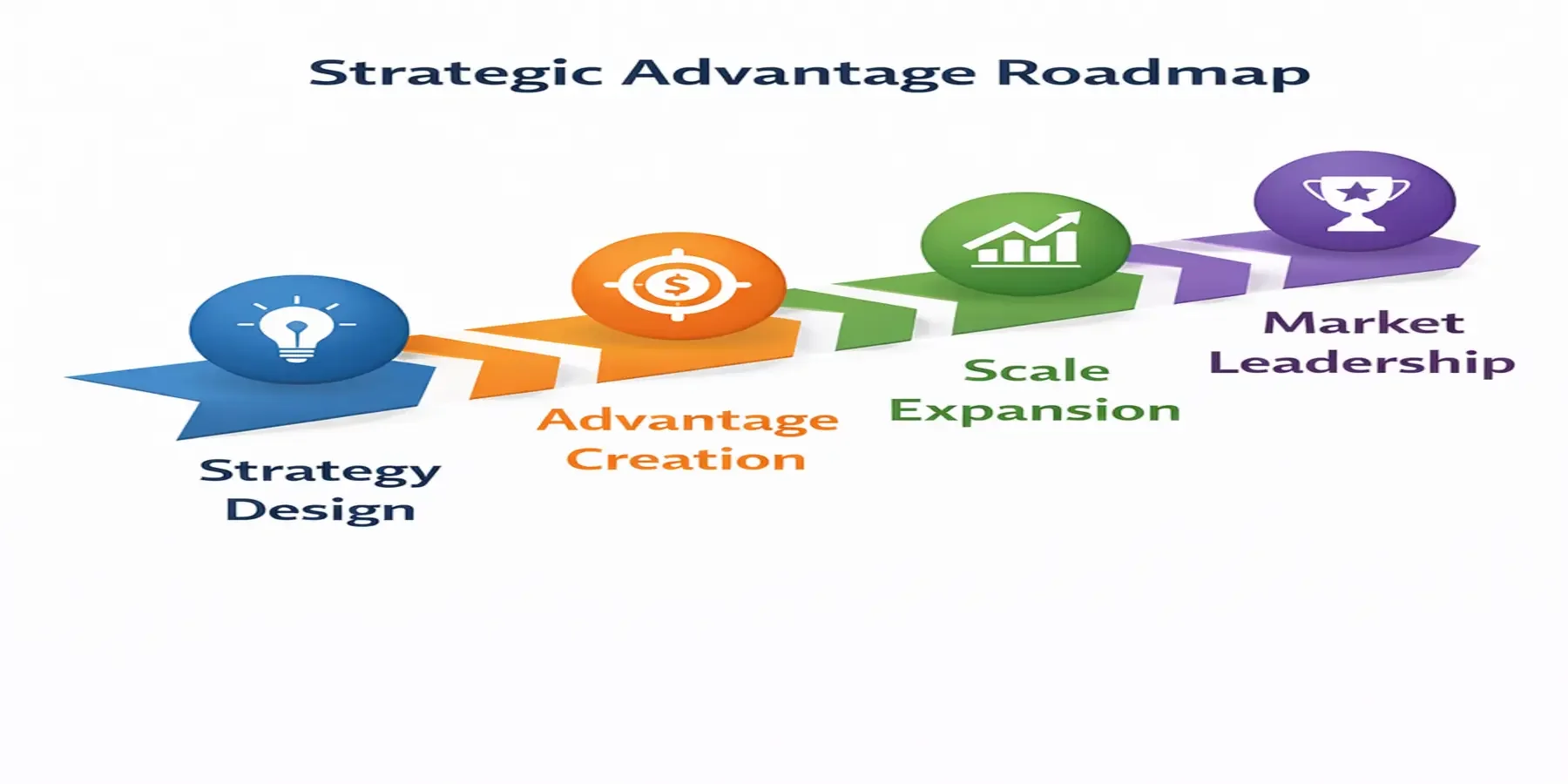
The most successful companies approach strategy with a different question.
Instead of asking:
How do we compete better?
They ask:
What structural advantage can we build that competitors cannot replicate?
Answering this question requires leadership teams to rethink:
• business models
• cost structures
• pricing architecture
• customer value propositions
• scale strategies
Companies that design their strategy around structural advantages consistently achieve superior long-term performance.