I’ve seen brilliant companies crash in Asia, despite meticulous planning and even top-tier advisory. Here’s what most CEOs never see coming — until it’s too late.

5 Market Entry Traps That Will Kill Your Expansion
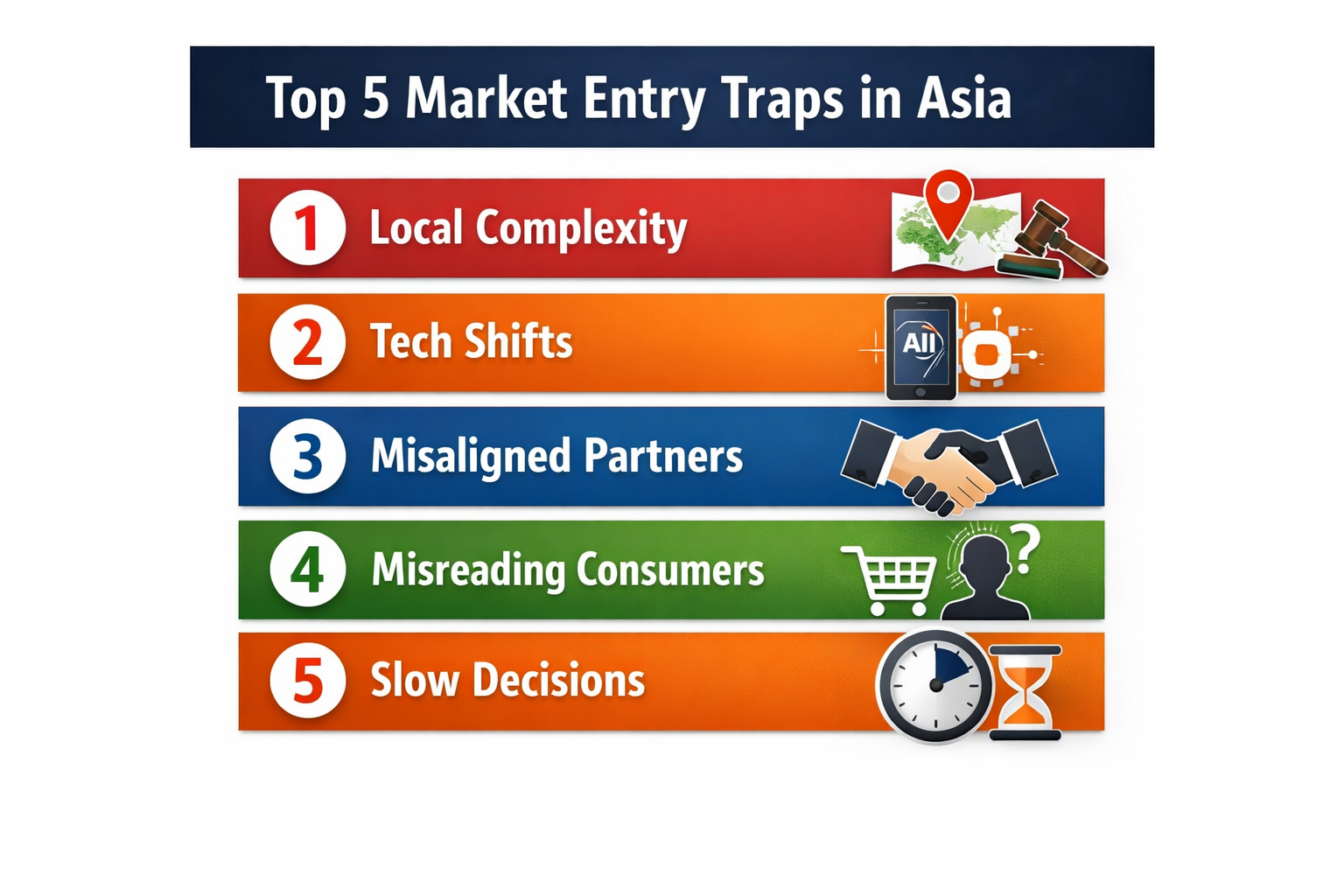
Underestimating Local Complexity
Multi-million dollar plans have crumbled because companies assumed Asia works like Europe or the US. I’ve seen licensing, local regulations, and cultural nuances destroy “perfect” strategies.
Ignoring Rapid Tech Shifts
AI, mobile-first consumer behavior, fintech — if your strategy is based on last year’s trends, you’re already behind. I’ve helped clients pivot entire rollouts in weeks, not months.
Misaligned Partners
Partnerships can be a silent killer. I’ve watched CEOs trust local partners who quietly mismanaged operations, leading to lost opportunities and wasted resources.
Misreading Consumers
Luxury, fintech, retail — brands assume they know local preferences. They don’t. I’ve stopped campaigns mid-launch because the audience was reacting completely differently than expected.
Lack of Agile Decision-Making
Boards that follow rigid quarterly cycles get crushed by competitors moving weekly. I’ve seen hesitation cost millions — sometimes before a single product hits the market.
Hidden Forces That Blindside Most Executives
- Operational bottlenecks — HR, supply chain, compliance delays that silently drain resources
- Regulatory surprises — sudden licensing, taxes, tech restrictions that halt progress overnight
- Market perception — small mistakes are noticed instantly and can ruin brand credibility
- Competitors moving faster — your hesitation is their opportunity

How I Make CEOs Succeed in Asia
- Local Expertise: Specialists who understand culture, regulations, and tech intimately — I bring them in.
- Iterative Approach: Test small, scale fast. Early pilots expose the hidden landmines before they become disasters.
- Agile Governance: Boards must pivot weekly. I’ve restructured teams mid-quarter to prevent collapse.
- Tech Leverage: AI and predictive analytics aren’t optional. They save millions and uncover risks others miss.
- Brand Discipline: Global messaging is meaningless if it doesn’t land locally. I ensure it hits every time.

The Truth CEOs Rarely See
I’ve watched brilliant strategies collapse, not because the ideas were weak, but because the people in charge didn’t see the small, hidden forces moving faster than they could react.
Asia doesn’t wait. Regulations shift overnight. Partners change allegiances. Technology evolves while boards debate. Most CEOs never see it coming — until it’s too late.
Surviving — not just entering — these markets requires more than a plan. It requires experience, insight, and the ability to anticipate what others miss. I’ve been there. I’ve seen it fail. I know how to turn it around.
