
STRATEGIC REALITIES | ASIA
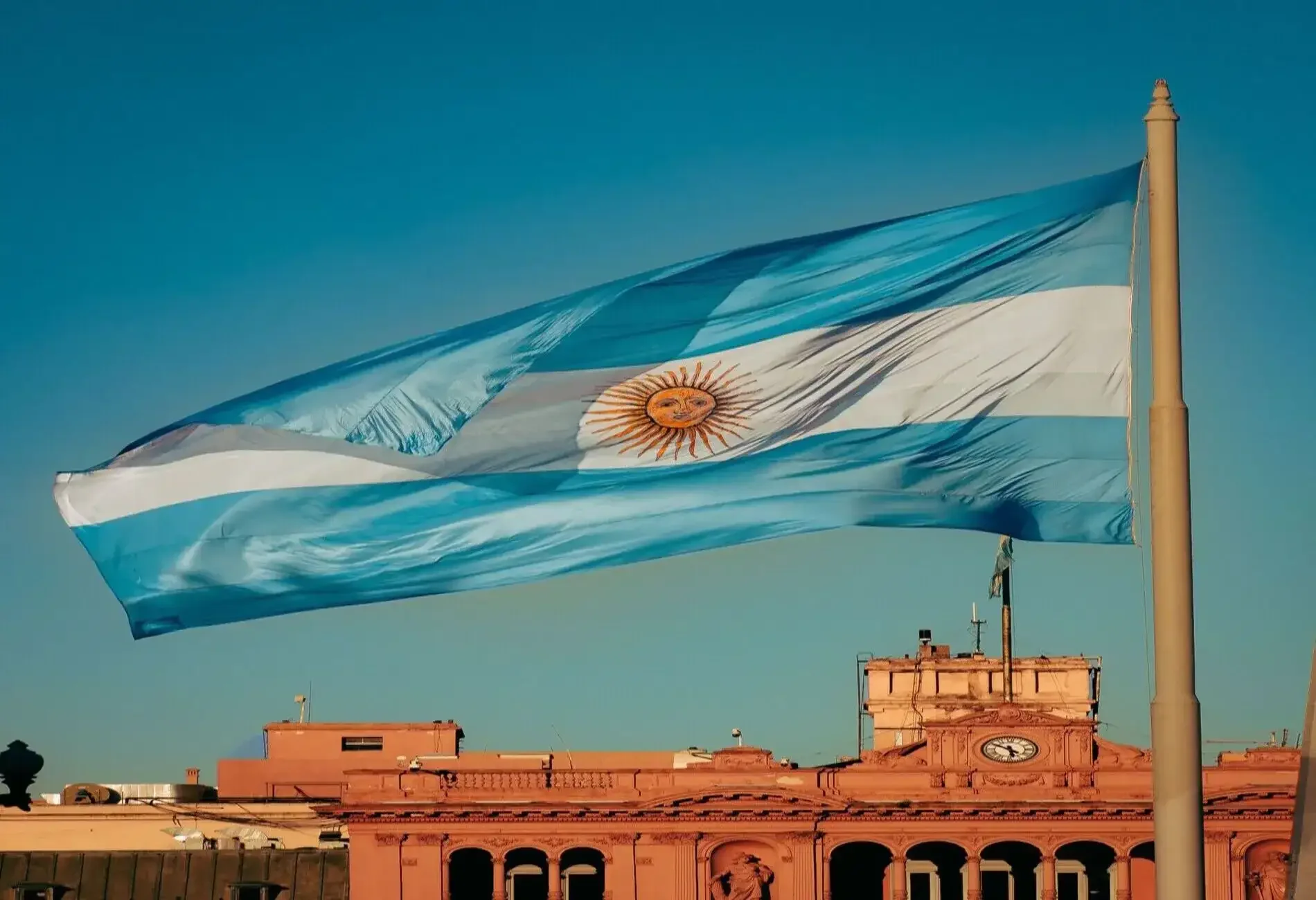
Argentina is often discussed through the lens of inflation, government spending, taxation, currency instability and economic reform.
But there is another way to look at the country.
Look at Argentina as a strategic case study for business leaders.
Because when the economic environment changes fundamentally, companies discover something uncomfortable:
The conditions that helped a business survive may not be the conditions that allow it to compete.
Argentina's operating environment has changed significantly.
Annual inflation, which was above 200% in late 2023, had fallen to around 32.5% by early 2026. The country has also recorded two consecutive years of primary fiscal surpluses, while trade, foreign-exchange and regulatory restrictions have been substantially changed.
Whatever one's view of the policies behind these changes, the strategic consequence is the same:
Companies have to operate in a different environment.
And that creates a question every leadership team eventually faces:
If the conditions protecting our business change, is our business actually competitive?
THE EASY DECISION IS TO ADD
Leadership teams are generally good at adding.
Add a product.
Add a salesperson.
Add another office.
Add a discount.
Add a benefit.
Add another business unit.
Add another layer of management.
Add another budget.
Add another initiative.
Adding creates activity.
It also creates beneficiaries.
And once people benefit from something, removing it becomes much harder.
This is true in companies.
It is true in markets.
And it is true in economies.
A benefit introduced for a legitimate reason can eventually become something people simply expect.
A subsidy can become an assumption.
A protection can become part of a business model.
A tax incentive can become embedded in an investment decision.
A regulation can create an entire ecosystem around itself.
And inside companies, the same thing happens.
A business unit that was once strategic becomes difficult to close.
A product that no longer earns its cost continues because customers expect it.
A management layer survives because removing it creates discomfort.
A country office continues because nobody wants to admit that its original rationale has disappeared.
**Adding is easy.
Removing is leadership.**
THE COST OF NOT MAKING THE DECISION
One of the most common strategic mistakes is to evaluate only the cost of making a decision.
What will it cost us to close the operation?
What will it cost us to reduce the workforce?
What will customers think?
What will employees think?
What will happen to revenue?
What will happen to our reputation?
These are legitimate questions.
But there is another question that is often missing:
What will it cost us if we do nothing?
The cost of keeping an underperforming business is not zero.
The cost of maintaining an obsolete product is not zero.
The cost of carrying excess capacity is not zero.
The cost of protecting a declining market position is not zero.
The cost of waiting is not zero.
Inaction is also a decision.
And sometimes it is the most expensive decision a leadership team can make.
WHEN THE ENVIRONMENT CHANGES, OLD ASSUMPTIONS BECOME EXPENSIVE
Companies rarely make strategic decisions in a vacuum.
They build business models around assumptions.
A certain exchange rate.
A certain labour cost.
A certain tax structure.
A certain level of demand.
A certain degree of competition.
A certain cost of capital.
A certain level of protection.
A certain customer behaviour.
When those assumptions change, the strategy built around them may no longer work.
This is one of the most important lessons from Argentina.
The country is moving through a period of significant economic adjustment. Inflation has declined sharply from its previous extremes, fiscal discipline has strengthened, and restrictions and distortions affecting businesses have been reduced in several areas.
That does not automatically make every company more competitive.
It does something more important.
It changes the test.
Businesses that previously operated with substantial distortions around them may now have to compete under different conditions.
For management, the question becomes:
Which part of our performance comes from the strength of our business — and which part comes from the environment around it?
That question is relevant far beyond Argentina.
THE COST OF THE STATE DOES NOT STAY IN GOVERNMENT
Government spending eventually has to be financed.
The mechanism can vary.
Taxes.
Borrowing.
Inflation.
Reduced investment.
Lower public services.
Or some combination.
But the economic cost does not remain inside government.
It eventually reaches companies.
Argentina provides a particularly useful example because its tax system has historically included several distortionary taxes. The OECD notes that taxes on financial transactions and provincial business turnover can influence business behaviour, investment decisions and the allocation of resources.
The strategic issue for companies is therefore not simply:
“How much tax do we pay?”
It is:
“How much does the economic system around us change the economics of our business?”
A company can be operationally efficient and still operate in an expensive environment.
It can have a good product and still face structural cost disadvantages.
It can have strong management and still be constrained by rules, taxes, infrastructure or financing conditions.
That distinction matters.
Because management needs to know which problems belong to the company — and which belong to the environment.
And then it needs to decide what can actually be changed.
INFLATION DOES MORE THAN RAISE PRICES
Inflation is usually discussed as a financial problem.
For companies, it is also a decision-quality problem.
When prices are changing rapidly, management has a harder time distinguishing:
Revenue growth from price increases.
Margin improvement from inflation.
Real demand from nominal demand.
Cost increases from structural inefficiency.
Investment returns from monetary distortion.
Customer behaviour from temporary purchasing patterns.
That makes strategic decisions harder.
A company may appear to be growing when it is not gaining real volume.
Margins may appear stable while purchasing power is deteriorating.
A price increase may protect profitability today while destroying demand tomorrow.
Capital expenditure decisions become harder to evaluate.
Long-term contracts become more difficult to price.
And management can begin reacting to numbers rather than understanding what the numbers actually mean.
Good strategy requires good signals.
When the economic environment distorts those signals, leadership needs to work harder to determine what is real.
EVERY INTERVENTION CHANGES BEHAVIOUR
This is one of the most important strategic lessons.
A decision rarely produces only its intended result.
Change a price and customers respond.
Tax an activity and companies change their behaviour.
Protect an industry and competitors react.
Subsidise demand and demand changes.
Restrict supply and suppliers adapt.
Remove a restriction and new competitors may appear.
Change housing economics and landlords, tenants, developers and investors respond differently.
The original decision may be logical.
The second-order consequences may be very different.
This is where strategy becomes more than choosing an action.
It means asking:
What will everyone else do because of our decision?
That question belongs in every boardroom.
Before launching a new product.
Before entering a country.
Before restructuring a subsidiary.
Before cutting costs.
Before acquiring a company.
Before increasing prices.
Before protecting a declining business.
The first-order effect is rarely the whole story.
THE RENTAL CRISIS: WHEN A SOLUTION CHANGES THE MARKET

Housing provides another useful strategic example.
When policymakers attempt to improve affordability or protect tenants, the immediate objective may be straightforward.
But owners, developers, investors and tenants do not stand still.
They respond.
If the economics of renting change, some owners may reconsider whether to rent.
Developers may reconsider investment.
Investors may redirect capital.
Tenants may change their behaviour.
Supply can respond differently from demand.
The strategic lesson is not whether a particular housing policy is right or wrong.
It is simpler:
Every intervention changes incentives.
Companies face exactly the same reality.
Give customers a discount and their behaviour changes.
Reward one sales channel and another may weaken.
Protect one business unit and another may lose resources.
Change compensation and employees optimise around the new system.
Introduce a KPI and people begin managing the KPI.
People respond to incentives — including the incentives management creates unintentionally.
COMPETITIVENESS BEGINS WHEN PROTECTION ENDS
This may be the most important lesson for companies.
Protection can make a business appear stronger than it really is.
A tariff can reduce competition.
A subsidy can support margins.
A favourable exchange rate can improve export economics.
Cheap financing can sustain investment.
A dominant customer can provide volume.
A strong parent company can absorb losses.
None of these necessarily means the underlying business is weak.
But none proves that it is strong either.
Eventually, the protection may disappear.
Competition arrives.
Costs rise.
Capital becomes more expensive.
Customers become more demanding.
Or the parent company simply stops funding the losses.
Then the real test begins.
Can the business compete without the conditions that protected it?
Argentina's current economic trajectory makes this question particularly visible. OECD analysis notes that the country's domestic sectors have been lagging behind stronger export-oriented areas such as energy, mining and agriculture, while further competition and productivity improvements remain important.
For individual companies, that creates a strategic opportunity.
Not simply to ask:
“How do we survive the new environment?”
But:
“What should this business look like if we assume the old environment is gone?”
That is a much more powerful question.
CRISIS CAN HIDE WEAK STRATEGY
A crisis can hide problems.
Inflation can hide weak margins.
Currency movements can hide weak productivity.
Protection can hide weak competitiveness.
Cheap capital can hide poor investment decisions.
Rapid market growth can hide a weak business model.
And strong demand can hide operational inefficiency.
Then the environment changes.
Suddenly the weaknesses become visible.
This is why periods of stabilization can be strategically uncomfortable.
When the noise decreases, management can finally see the business more clearly.
The question is no longer simply how to survive.
It becomes:
What remains economically valid when the distortion disappears?
THE ARGENTINA TEST FOR CEOs
Argentina offers a useful set of questions for any leadership team — whether the company operates in Buenos Aires, Seoul, Singapore, Frankfurt or Shanghai.
WHAT HAVE WE ADDED THAT WE CAN NO LONGER AFFORD?
Not everything that was useful remains useful.
WHICH BENEFITS HAVE BECOME UNTOUCHABLE SIMPLY BECAUSE PEOPLE ARE USED TO THEM?
Habit is not a strategy.
WHICH COSTS ARE NECESSARY — AND WHICH ARE HISTORICAL?
Some costs support the business.
Others simply support the past.
WHICH PARTS OF THE BUSINESS ARE TRULY COMPETITIVE?
And which depend on favourable conditions continuing?
WHAT WOULD WE STOP IF WE WERE BUILDING THE COMPANY TODAY?
This question often reveals more than another strategic planning exercise.
WHAT ARE WE PROTECTING BECAUSE CHANGING IT IS PAINFUL?
Pain is not evidence that a decision is wrong.
Sometimes it is evidence that the decision matters.
WHAT IS THE COST OF KEEPING THE DECISION WE ALREADY MADE?
Every existing decision consumes resources.
IF WE HAD TO MAKE THE DECISION TODAY, KNOWING WHAT WE KNOW NOW, WOULD WE MAKE THE SAME DECISION?
If not, why are we still living with it?
THE BIGGER LESSON FOR LEADERSHIP
The strategic lesson from Argentina is not about choosing one economic model over another.
It is about what happens when the environment around a business changes.
Companies that were designed for yesterday's conditions eventually have to confront tomorrow's economics.
Some will adapt.
Some will invest.
Some will restructure.
Some will exit.
Some will discover that their underlying economics are stronger than they thought.
Others will discover that the environment was doing more of the work than management realised.
That is why strategic leadership is not simply about knowing what to build.
It is also about knowing:
What to stop.
What to remove.
What to redesign.
What to challenge.
What to stop protecting.
And sometimes:
What to let go.
Adding is easy.
Removing is leadership.
The real test is not whether a company can survive the environment it was built for.
It is whether it can compete in the environment that comes next.
THE QUESTION LEADERS SHOULD BE ASKING

When the economic environment changes, management naturally asks:
“What should we do?”
The better starting point may be:
“Which assumptions behind our current strategy are no longer true?”
Because strategy built on yesterday's assumptions eventually becomes tomorrow's constraint.
Argentina is still working through a significant economic transition. Inflation has fallen sharply, fiscal balances have strengthened, and the competitive and regulatory environment is changing. At the same time, the IMF and OECD continue to identify structural challenges around productivity, investment, competition, taxation and the cost of doing business.
For companies, the lesson is broader than Argentina.
When the environment changes, the business must be willing to change with it.
Not because yesterday's decisions were necessarily wrong.
But because today's conditions may make them wrong now.
And that is where strategy begins.
The question is no longer how to protect the business we have.
It is whether we are willing to build the business we will need.