WHY THE OLDEST STORE OF VALUE STILL MATTERS IN THE MOST UNCERTAIN WORLD
STRATEGIC REALITIES | ASIA
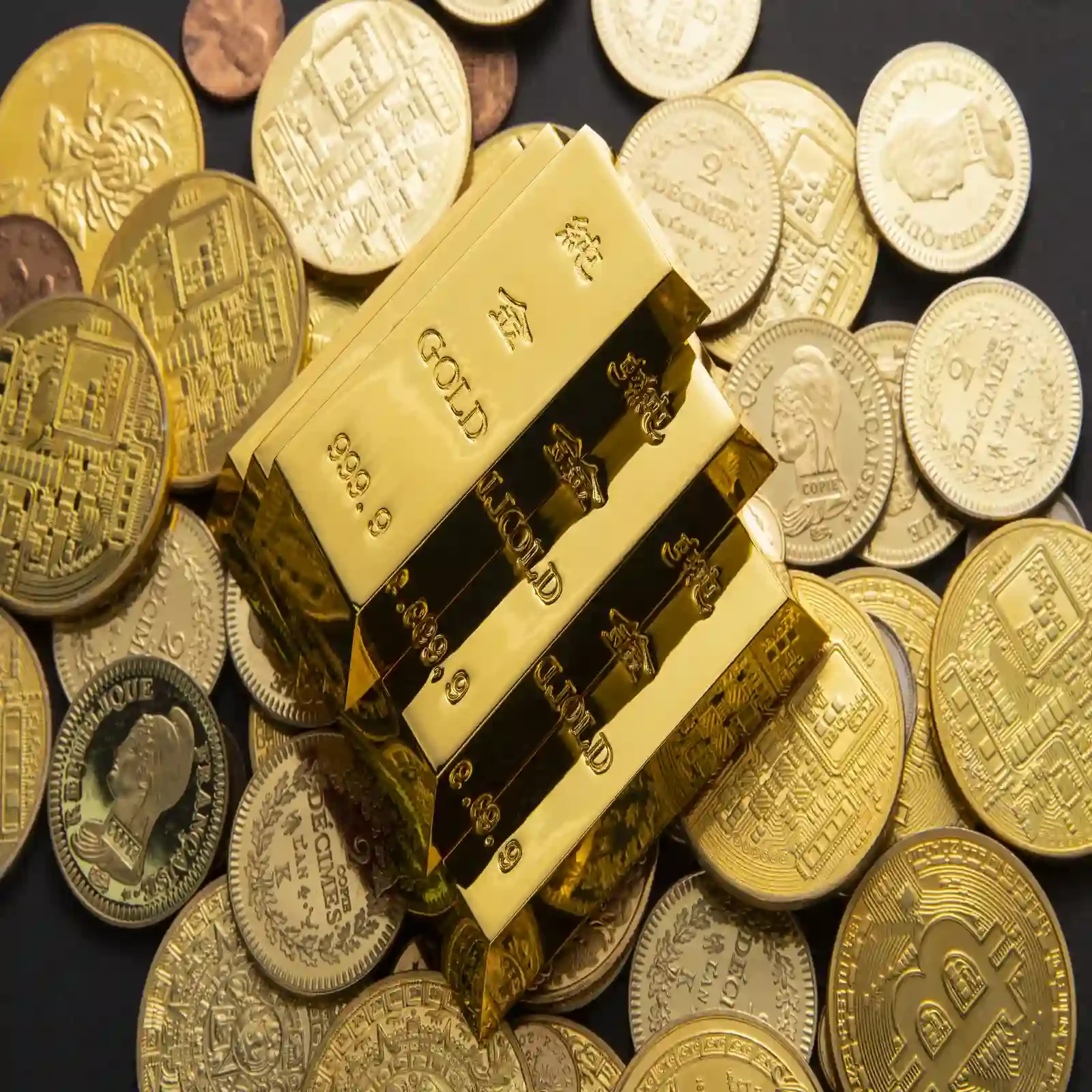
Gold is supposed to be obsolete.
We have central banks, sophisticated financial markets, government bonds, digital currencies, instant payments, cryptocurrencies, artificial intelligence and financial systems that move billions of dollars around the world in seconds.
We no longer need pieces of metal sitting in vaults.
At least, that is the theory.
But then something strange happens.
Central banks keep buying gold.
Not jewellery.
Not gold-plated products.
Gold.
Physical reserves.
In 2025, central banks added approximately 863 tonnes of gold to their reserves, keeping official-sector buying historically elevated. In the second quarter of 2026 alone, central banks added another 289 tonnes. The World Gold Council's latest survey also found that 93% of reserve managers surveyed reported holding gold, while 45% expected their own holdings to increase over the following 12 months.
That raises a rather uncomfortable question:
If gold is an outdated relic, why are some of the world's most sophisticated financial institutions still accumulating it?
Perhaps gold is not old-fashioned.
Perhaps our assumption that we no longer need it is.
THE WORLD IS NOT RUNNING OUT OF MONEY
The world has no shortage of money.
What may become scarce is something much more important:
confidence.
Confidence in currencies.
Confidence in governments.
Confidence in financial institutions.
Confidence in counterparties.
Confidence in the geopolitical system.
Confidence that today's assumptions will still hold tomorrow.
The global economy is becoming more interconnected and, at the same time, more fragmented.
Trade relationships are changing.
Sanctions can suddenly change the accessibility of financial assets.
Government debt has reached extraordinary levels in many economies.
Currencies compete.
Interest-rate regimes change.
Geopolitical tensions increasingly affect commercial and financial decisions.
None of this means that the global financial system is about to collapse.
It means something more subtle:
Resilience has become strategically more valuable.
And resilience requires diversification.
Not because we know what will happen.
Because we don't.
GOLD HAS ONE VERY UNUSUAL CHARACTERISTIC
Gold is not necessarily "safe" in the sense that its price cannot fall.
It can.
Sometimes dramatically.
Gold pays no dividend.
It produces no operating cash flow.
It does not grow a business.
It does not employ anyone.
It can be expensive to store securely.
And its market price can be volatile.
So why does it matter?
Because gold has a characteristic that most financial assets do not:
It is not somebody else's promise to pay you.
A bank deposit is a claim against a bank.
A corporate bond is a claim against a company.
A government bond is a claim against a government.
A currency depends on the credibility and functioning of the monetary system behind it.
Gold has no issuer.
No CEO.
No government treasury behind it.
No corporate balance sheet.
No credit rating.
No maturity date.
No promise to repay.
It simply exists.
That does not make gold automatically superior to other assets.
It makes gold different.
And sometimes difference is exactly what diversification is supposed to achieve.
The IMF has highlighted gold's lack of credit and counterparty risk while also stressing that gold remains a volatile asset and should not simply replace other reserve assets.
That distinction matters.
Gold is not necessarily price-safe.
It can be structurally resilient.
THE CENTRAL-BANK PARADOX
Here is perhaps the most interesting part of the story.
Central banks understand modern money better than almost anyone.
They operate monetary systems.
They manage foreign-exchange reserves.
They hold government securities.
They understand interest rates, liquidity, currencies and financial markets.
And yet they continue to hold gold.
In 2025, global central-bank purchases remained far above the 2010–2021 annual average. In 2026, central-bank buying has continued, although quarterly figures fluctuate and some institutions have also sold.
The European Central Bank reported that gold represented 27% of total official foreign reserves at the end of 2025, although it cautioned that the sharp increase in gold prices itself mechanically increased gold's share of reserves.
So the question is not:
"Do central banks think gold can only go up?"
There is no evidence for that.
The more interesting question is:
"Why do they consider gold strategically useful enough to keep?"
One answer is diversification.
Another is the absence of credit risk.
Another is its history as a reserve asset.
Another is that it can provide exposure outside the direct liability structure of another issuer.
And another is simply this:
Gold has survived the failure of almost every monetary system that came before it.
That is a remarkable track record.
GOLD DOES NOT NEED YOUR TRUST
This may be the most provocative way to think about it.
Modern finance is fundamentally based on trust.
You trust your bank.
You trust the payment system.
You trust the currency.
You trust the government behind the currency.
You trust the institution holding your assets.
You trust the counterparty.
You trust the legal system.
Most of the time, this works extraordinarily well.
That is one of the great achievements of modern civilisation.
But when confidence is questioned, the structure becomes more complicated.
Gold offers something unusual:
it does not require you to trust an issuer.
Of course, you still need to trust the market, the custodian if someone else stores it, the legal environment and the authenticity of the physical asset.
But the underlying metal does not owe you anything.
It has no obligation to perform.
It cannot default.
It cannot declare bankruptcy.
It cannot dilute its own shares.
It cannot issue another trillion units because management needs capital.
Gold does not promise you anything.
And perhaps that is precisely why it has survived.
WHY THE BIBLE TALKS ABOUT GOLD
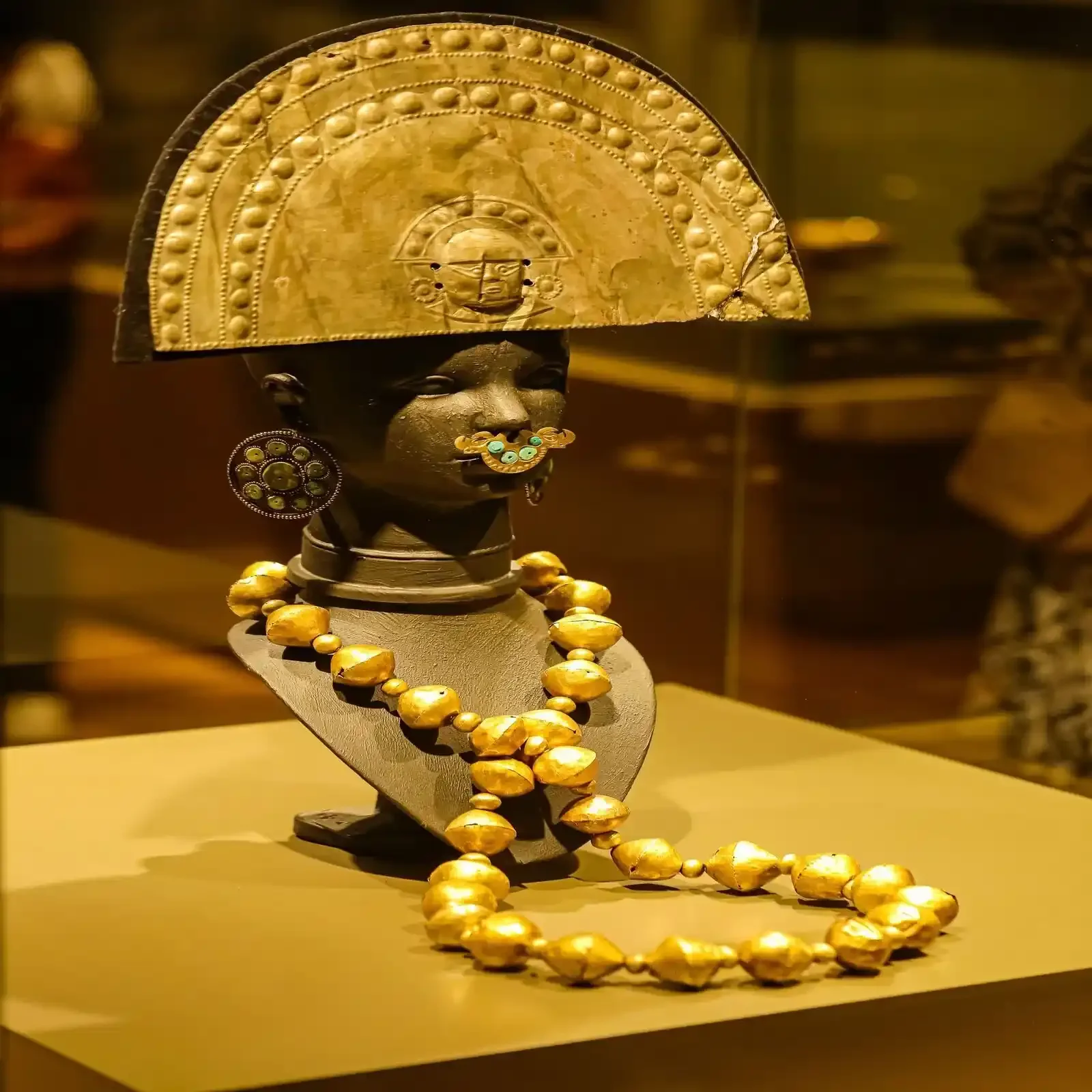
Gold's importance did not begin with Wall Street.
It did not begin with central banks.
It did not begin with modern investing.
It is deeply embedded in human civilisation.
The Bible refers to gold repeatedly — including gold associated with places such as Havilah and Ophir, gold used in sacred objects, wealth, craftsmanship and precious materials.
Gold appears throughout the biblical narrative because ancient societies already understood its exceptional physical and symbolic qualities.
It was rare.
It was beautiful.
It was durable.
It did not rust like iron.
It did not rot like organic materials.
It could be melted and reshaped without losing its fundamental nature.
And it could be recognised across political boundaries.
There is an important distinction here.
The Bible is not giving investment advice about gold.
The significance is historical.
The repeated presence of gold tells us something about how deeply human civilisation has associated the metal with wealth, value, power and permanence.
Thousands of years later, that association has not disappeared.
THEN THERE IS JOHN WICK

And this is where popular culture accidentally captures something very interesting.
Why does John Wick use gold coins?
The Continental does not settle its transactions with credit cards.
It does not rely on ordinary bank transfers.
Its fictional underground economy uses gold coins as a recognised medium of exchange and status.
Obviously, this is cinema.
It is not an economic model.
But the symbolism is clever.
The coin is more than money.
It represents:
access.
trust.
recognition.
settlement.
membership in a system.
The person receiving the coin does not need to ask:
"Which bank issued this?"
"Will the company still exist?"
"Will the currency be accepted tomorrow?"
The coin itself communicates value within that fictional system.
And that points to an ancient idea:
When trust between parties becomes complicated, a universally recognised store of value becomes powerful.
THE STRANGE THING ABOUT GOLD
Gold has survived almost every technological revolution.
Coins came.
Paper money came.
Banks came.
Central banks came.
Credit cards came.
Electronic banking came.
Cryptocurrencies came.
Artificial intelligence is now transforming financial services.
And yet gold remains.
That is not proof that gold will outperform.
It is not proof that gold is the best asset.
It is simply evidence of something interesting:
Humanity has repeatedly invented new forms of money without eliminating the demand for gold.
Why?
Perhaps because money and gold solve different problems.
Money is primarily about exchange.
Gold has historically also been about preservation.
GOLD IS NOT MONEY — AND THAT IS PART OF THE POINT
A modern economy cannot function efficiently by using gold for every transaction.
Imagine paying salaries in gold.
Buying coffee in gold.
Paying taxes in gold.
Settling international trade physically in gold.
It would be absurdly inefficient.
Modern currencies solve that problem.
They allow economies to move quickly.
But speed creates dependence.
Digital money is incredibly efficient because everyone trusts the system behind it.
Gold is almost the opposite.
It is slow.
Physical.
Imperfect.
Difficult to move in large quantities.
And precisely because it is not dependent on a digital infrastructure or issuer, it offers a different kind of resilience.
Modern money gives us speed.
Gold gives us independence from the issuer.
The two do not have to be enemies.
They can serve different purposes.
THE UNCOMFORTABLE QUESTION
Here is where the gold debate becomes genuinely interesting.
Suppose the global financial system becomes more stable.
Suppose inflation falls.
Suppose geopolitical tensions decrease.
Suppose currencies remain trusted.
Suppose governments continue to honour their debts.
Would gold still matter?
Probably.
Because the value of an asset is not determined only by what happens during a crisis.
It is also determined by what it contributes to a system before the crisis.
Central banks do not hold fire extinguishers because they expect their buildings to burn tomorrow.
They hold them because resilience has value before the emergency occurs.
Gold can be viewed through the same strategic lens.
Not as a prediction.
Not as a bet.
As a form of diversification.
GOLD IS NOT A MAGIC SHIELD
This is where the conversation needs discipline.
Gold can fall.
Gold can underperform for long periods.
Gold does not generate earnings.
Gold does not innovate.
Gold does not create jobs.
Gold does not replace a productive business.
Gold does not replace cash needed to operate a company.
And owning physical gold introduces practical issues around storage, insurance, liquidity and security.
So the argument is not:
"Buy gold because gold always goes up."
That argument is too simplistic.
The argument is:
"Understand why gold exists in the first place."
Understand why governments hold it.
Understand why central banks continue to accumulate it.
Understand why humans have valued it for thousands of years.
Then make your own judgment.
THE REAL VALUE OF GOLD MAY BE WHAT IT DOES NOT DEPEND ON
This is perhaps the most important strategic lesson.
Countries diversify reserves.
Companies diversify suppliers.
Businesses diversify customers.
Investors diversify assets.
Why?
Not because they know exactly what will happen.
Because they don't.
The objective is not to predict every future scenario.
The objective is to avoid becoming completely dependent on one.
Gold fits naturally into this logic.
Its strategic attraction comes partly from what it does not depend on.
It does not depend on one company remaining profitable.
It does not depend on one bank remaining solvent.
It does not depend on one government maintaining purchasing power.
It does not depend on one currency remaining dominant.
It does not depend on one debtor honouring a promise.
That independence is difficult to reproduce.
PERHAPS GOLD IS NOT OLD-FASHIONED

This is where the story becomes provocative.
We tend to associate sophistication with complexity.
More technology.
More financial engineering.
More algorithms.
More derivatives.
More digital infrastructure.
More data.
More speed.
But sometimes sophistication means understanding what should not be eliminated.
Gold is remarkably simple.
It is scarce.
It is physical.
It is durable.
It is recognisable.
It is globally traded.
And after thousands of years, it is still held by the institutions responsible for managing national reserves.
Maybe that is not evidence of human failure to modernise.
Maybe it is evidence that some forms of value are difficult to improve upon.
THE DEEPER STRATEGIC LESSON
The lesson from gold is bigger than gold.
When uncertainty increases, dependence becomes more expensive.
That is true for countries.
It is true for corporations.
It is true for supply chains.
It is true for technology.
And it is true for personal wealth.
Resilience comes from having alternatives.
Gold is simply one example of an asset that sits outside many of the promises and dependencies that underpin modern finance.
It is not the answer to everything.
But it is difficult to ignore.
Especially when the world's central banks themselves refuse to ignore it.
GOLD HAS SURVIVED ALMOST EVERYTHING
Currencies disappear.
Companies disappear.
Banks disappear.
Governments disappear.
Empires disappear.
Financial systems change.
Technology becomes obsolete.
Gold remains.
That does not mean gold will always outperform.
It does not mean its price cannot fall.
It does not mean everyone should own it.
And it certainly does not mean gold is a substitute for productive assets or professional financial planning.
But it does suggest something worth understanding.
There is a reason humanity has continued to value gold for thousands of years.
And there is a reason central banks still keep it.
Perhaps the real value of gold is not that it promises extraordinary returns.
Perhaps its deeper value is much simpler:
When confidence becomes uncertain, having something that does not depend entirely on confidence can matter.
A FINAL THOUGHT
We live in an extraordinary period.
Technology is changing money.
Artificial intelligence is changing business.
Geopolitics is changing trade.
Governments are changing economic policy.
Financial systems are becoming increasingly digital.
Yet one of humanity's oldest stores of value remains inside the reserves of the world's most sophisticated financial institutions.
That alone deserves our attention.
Gold may not be the future of money.
But after thousands of years,
it has proven remarkably difficult to remove from the future of value.
Perhaps gold is not valuable because humanity has failed to invent something better.
Perhaps gold remains valuable because, after thousands of years, humanity has failed to invent something that removes the need for trust.
Gold is simple.
Scarce.
Physical.
Recognised.
And still here.
After thousands of years, perhaps the real question is not why we still need gold.
Perhaps it is why we ever thought we wouldn't.
ESP PERSPECTIVE
This article expresses the personal opinion of David Artigue, MBA, Founder & Managing Partner, Elite Strategy Partners, and is intended solely as a strategic and educational perspective on the historical, economic and strategic role of gold.
It is not financial, investment, tax or legal advice, and it is not a recommendation to buy, sell or hold gold or any other asset.